



 Michael Gareau, Founding President
However, a disease still tormenting researchers is cancer. According to the International Agency for Research on Cancer (IARC), there were 18 million new cancer cases in 2020 and 10 million cancer deaths worldwide. By 2040, the number is predicted to grow to 27.5 million and 16.3 million, respectively, with one million cancer deaths in the U.S. alone.
During his State of the Union Address on January 12, 2016, President Obama announced the launch of a new national effort to eliminate cancer. The Cancer Moonshot was idle for the next four years, and in early 2022, President Biden announced its re-ignition, highlighting new goals—to reduce the cancer death rate.
Statistics reveal that from 2010 to 2019, oncology clinical trials totaled 18,600 globally, and pharma is still pouring billions of dollars annually into finding better treatments.
Despite these efforts, the performance of cancer therapeutics is not showing a big improvement. Why?
“The problem of cancer cannot be addressed by therapeutics agents alone. We can think of an Amazon delivery truck arriving in the tumor city hit by a magnitude 10 earthquake. Roads and bridges are destroyed and inaccessible, making it impossible to deliver anything,” says Michael Gareau, founding president of Starpax Biopharma.
During tumor formation, cancer cells reproduce rapidly and consume most of the oxygen around them, forming shields called hypoxic zones. Hypoxia causes a slow proliferating, stem cell-like phenotype of cells, decreases senescence, and creates chaotic, malfunctioning, and collapsed blood and lymphatic vessels. The fact that blood vessels and lymphatics are impaired explains why the majority of a tumor’s volume doesn’t receive treatment. Many studies have demonstrated that 90% of the volume of a tumor receives little or no drug at all in systemic treatment.
The Most Critical Challenges to Beat Cancer Haven’t Been Addressed for a Century
Drugs don’t swim, they cannot penetrate and accumulate in hypoxic zones to destroy stem cells that generate metastasis. They also fail to stay in the tumor without being pushed back into the capillaries by the growing interstitial pressure of the tumor. They cannot travel throughout a tumor without vessels. For over a century, these challenges have not been directly addressed.
It is time to rethink therapeutics using multitechnologies to form a new breed of treatment to overcome all these challenges.
Starpax Biopharma has taken a significant leap in this regard.
The challenges around treating cancer have been around for centuries, and many studies have demonstrated that chemotherapy and immunotherapy are ineffective in hypoxic zones and spreading throughout the volume of the tumor while limiting side effects. Alternatively, radiation therapy requires oxygen to be effective at destroying cancer cells.
Starpax is building a new era in therapeutics with its latest model of multi-disciplinary biopharma-tech-AI. It has four research departments in its facilities—biochemistry, microbiology, electromagnetic engineering, and artificial intelligence—creating a single cancer treatment with multiple therapeutic effects.
The Never-Before-Seen Therapeutic Approach
The Starpax technology consists of two inseparable elements, Magnetodrones and PolarTrak, each requiring the other to work.
This particularity gives another dimension to cancer therapeutics. Starpax Magnetodrones comprise a proprietary non-pathogenic, self-propelled, aerotactic, and magnetotactic Bn1-S Starpax Bacterium developed in the Starpax laboratories from 800 mutations. They do not proliferate in the human body and die within 60 minutes after the injection, as the human body temperature is too high for them to survive.
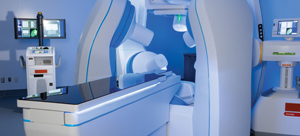
Magnetodrones carry regularly used, FDA-approved therapeutics, which are attached to their surface. Due to their microscopic size, Magnetodrones can swim in the interstitial space of tumor cells without the need for blood vessels. With their aerotactic particularity, they search for hypoxic zones and accumulate in those areas since the low oxygen level is the same as their culture medium. Their magnetotactic specificity makes them sensitive to special magnetic fields generated by the PolarTrak, a patented medical device the size of an MRI in which the patient is positioned.
PolarTrak generates unique virtual monopole magnetic field vectors that control in three dimensions the trajectory of the Magnetodrones in the tumor with extreme precision. While Magnetodrones are injected directly into the tumor, PolarTrak creates a magnetic sphere around the tumor to keep them captive inside.
Since the size of the Magnetodrones is bigger than the openings in the capillaries (fenestrae), they cannot penetrate into the blood system, escape the tumor, or generate unwanted side effects in the rest of the patient’s body.
-
The Problem of Cancer cannot be Addressed by Therapeutics Agents Alone. We can Think of an Amazon Delivery Truck Arriving in The Tumor City Hit by a Magnitude 10 Earthquake. Roads and Bridges are Destroyed and Inaccessible, Making it Impossible to Deliver Anything
The monopole magnetic vectors controlled by the Polartrak’s Ai converge to a focal point in the middle of the tumor that Magnetodrones are forced to follow. The PolarTrak then moves this focal point throughout the tumor, guiding the Magnetodrones. As a result, they spread throughout the tumor, releasing the anti-cancer drug on their path and destroying cancer cells, including the stem cells in hypoxic areas that are the major drivers of the metastatic spread of cancer.
“It is time to rethink therapeutics using multi-technologies to change the way to treat cancer to overcome the challenges that chemotherapy and immunotherapy have never been able to solve,” says Gareau.
The first therapeutic effect is localized chemotherapy to the tumor, avoiding side effects.
The second benefit is the hypoxic area treatment resulting from the ability of the Magnetodrones to detect, reach, penetrate, and accumulate in hypoxic zones with drugs that kill cancer stem cells.
The third therapeutic effect is systemic immunotherapy. A third-party independent preclinical study showed that the Bn1-S bacteria, part of the Magnetodrones, triggers the immune system when introduced in a tumor, inducing deep infiltration of immune cells (T-cells, NK-cells, neutrophils, and macrophages). In addition, preclinical trials have shown that injecting the Bn1-S bacteria into the tumor (without any drug) generates significant tumor regression. More independent studies in non-human primates have produced data supporting the conclusion that the Starpax Bn1-S bacteria induce the activation of immune cells. Starpax does not rely on immunotherapy to eradicate advanced tumors. However, a patient’s immune response triggered by the Starpax Bn1-S bacterium may result in T-cells memorizing the cancer cell antigens. This might result in the reproduction and circulation of these T-cells in the blood system attacking floating cancer cells and metastasis without circulating the drug in the patient’s body. This immune response will be studied in clinical trials.
Safe and Stable with Remarkable Results
The Starpax therapeutics are expected to be safe for humans. The Magnetodrones are non-pathogenic.
It is Time to Rethink Therapeutics Using Multi-Technologies to Change The Way to Treat Cancer to Overcome The Challenges That Chemotherapy and Immunotherapy have Never Been Able to Solve
Because of the Starpax intratumoral injection, 100% of the dose reaches the tumor as compared to 0.7% of the systemic dose of modern therapeutics. Polartrack’s magnetic fields have no problem to infiltrate tissues of a tumor. They have been tested in mice, rats, rabbits, and 125 pounds pork. They can even cross a one-inch stainless steel plate.
Independent, third-party analysis demonstrated exceptional preclinical results; a 100 percent remission rate, no side effects observed, no inflammation, and no pathological changes in the liver, kidney, and heart tissues. Calculation of the dose demonstrated 800 times fewer toxic molecules in the patient’s body and 50 times more drugs in the tumor than systemic chemotherapy treatments.
Last June, Starpax installed PolarTrak in a hospital for its clinical trials and completed the construction of three new laboratories and a GMP Magnetodrones manufacturing plant. Clinical trials will start this year for pancreas, prostate, head and neck, colorectal, breast recurrence, and vulvar cancers.
