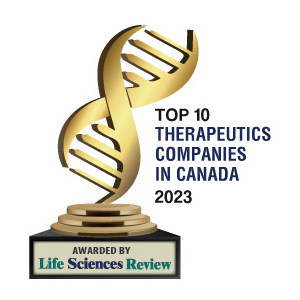
Top 10 Therapeutics Companies in Canada – 2023
Despite the advancement of medical science, there are still many unmet therapeutic needs. Developing new drugs against novel targets or agents with greater selectivity for existing targets will improve the therapeutic options. New drug administration approaches could improve clinical outcomes and patients' quality of life.
Technology-based evaluations and interventions can improve a clinician's work with clients. Additionally, technology allows alternative models of care to be offered to clients with specific needs that limit their ability to participate in more conventional interventions targeting behavioral health. Technology-assisted care (TAC) can transcend geographic boundaries to reach many people otherwise unable to access services and is helpful in a wide variety of settings, including web-based interventions offered in the home, community organizations, schools, emergency rooms, and healthcare providers' offices, as well as via mobile devices and online social networks. Furthermore, TAC is often accessible on demand at the users’ convenience, thus reducing barriers to accessing care.
The main costs associated with technology-based therapeutic tools involve keeping up with the latest research, training new staff members, and evaluating effectiveness. There are deployment costs, including bandwidth for online access, technical support, licensing technology, and ongoing equipment maintenance. Thus, technology-based assessment and intervention tools may be cost-effective and beneficial for many resource-constrained service settings. Overall, TAC holds great potential to impact public health.
In this edition, we aim to provide our readers with insight into the current therapeutics space and the innovations in this sector.
Nominate a Company
Usually, the qualified subscribers of our magazine nominate companies with whom they have collaborated and experienced exceptional results to be in this list. Did a company you recently worked with give you stellar results and ROI? Did it turn out to be one you would wholeheartedly recommend to peers? Or do you know of such an outstanding company through your network? Please fill in the details below and nominate them to be featured here.

Top Therapeutics Companies in Canada